Dohwasal (도화살) Meaning: The Peach Blossom Star, Not Just a Makeup Look
For entertainment & self-reflection. Not advice.
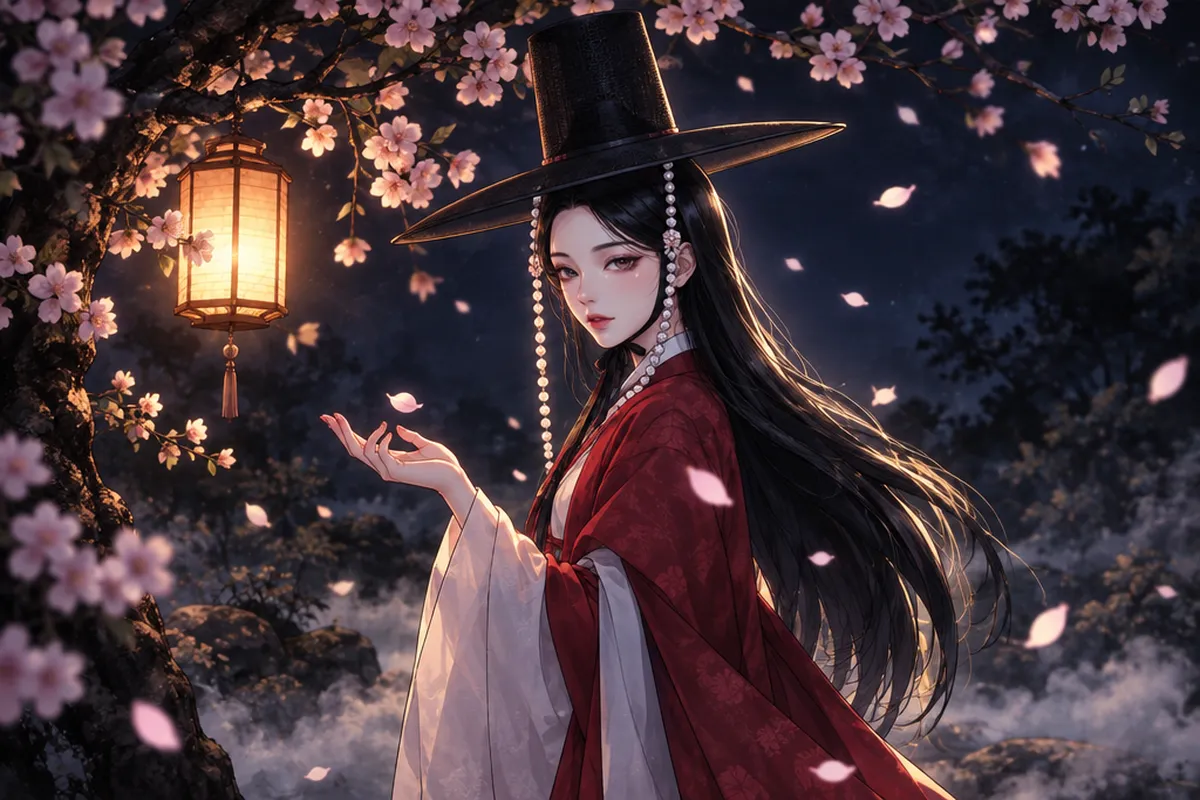
Dohwasal (도화살, 桃花殺) is the "peach blossom" marker in a Korean Saju (사주) chart. Traditionally it points at charm and attraction: the pull that makes people look twice. It is read from the animals of your birth chart, so you can't add it with a brush. That hasn't stopped it from becoming a makeup look, which is probably how you found the word.
A four-panel version



Where the name comes from
Do (桃) means peach and hwa (花) means blossom. Sal (殺) is the word Saju uses for its named markers, the same "sal" you see in yeokmasal (the traveling star) or hwagaesal (the canopy star). The peach blossom image is old and shared across East Asia. In Chinese Bazi the same idea is called the peach blossom star, and Korean readers use both names.
In Munyeo's chart layout the same position appears as Peach Blossom Star (년살, 年殺), one of the twelve sinsal. Traditional Korean practice uses dohwasal and nyeonsal almost interchangeably for this spot, so if your reading shows "Peach Blossom Star," that is the dohwasal line.
How to check if your chart has it
The traditional rule works from your year animal, which is the earthly branch of your birth year. The twelve animals fall into four groups of three. Each group has one "peach blossom" animal. If that animal appears anywhere else in your chart, in the month, day, or hour, the chart carries dohwasal.
Find your peach blossom animal
Born in a year of the
Monkey 申 · Rat 子 · Dragon 辰
Peach blossom
Rooster 酉
Born in a year of the
Pig 亥 · Rabbit 卯 · Goat 未
Peach blossom
Rat 子
Born in a year of the
Tiger 寅 · Horse 午 · Dog 戌
Peach blossom
Rabbit 卯
Born in a year of the
Snake 巳 · Rooster 酉 · Ox 丑
Peach blossom
Horse 午
Then look for that animal in your month, day, or hour pillar.
Two details trip people up:
- Your Saju year starts in early February, not January 1. The Saju year turns at ipchun (입춘), the start of spring, around February 4. Someone born on January 20, 1996 belongs to the Pig year of 1995, not the Rat year of 1996.
- The month, day, and hour animals aren't on a calendar you can glance at. They come from a sixty-day and sixty-month cycle, and the hour animal needs your birth time. This is the part a chart calculator does for you.
Some readers also check from the day animal instead of the year animal, and some count the four peach blossom animals (Rat, Rabbit, Horse, Rooster) anywhere in the chart as a mild version. Munyeo uses the year-animal rule above.
Then and now: how the reading changed
In older books
- A warning about romance and scandal
- Seen as a risk, especially for women
- Something to be "managed"
In modern readings
- Social magnetism and presence
- Useful in sales, stage, creative, and public work
- One lean in a chart, not a verdict
The shift says more about the times than about the marker. A trait that looked dangerous in a village where everyone watched everyone looks like an asset on a stage, in a meeting, or on a dating app. Munyeo's reading of this position leans modern: people tend to notice you more than usual, without you doing anything different.
Why "dohwasal makeup" is a thing
In Korean beauty content, "dohwasal makeup" names a look that tries to recreate that peach blossom glow: flushed peach-pink cheeks, a soft pink under-eye, glossy lips, slightly wet-looking eyes. It borrows the idea of effortless charm, not the chart rule. The makeup is fun. It just answers a different question from the one Saju asks, which is where your chart already leans before any makeup goes on.
Common questions
Is dohwasal good or bad? Neither, on its own. It is one marker among many, and how it reads depends on the rest of the chart. Modern readers treat it as a strength that needs a little care, like any trait that draws attention.
Can you get dohwasal later in life? Your birth chart doesn't change. Readers do look at which animal rules a given year or ten-year cycle, so a peach blossom year can feel like a season of being noticed.
Does it only matter for love? No. It is about being noticed, and that shows up at work and with friends as much as in dating.
How do I see my whole chart? You need your birth date and, ideally, your birth time. A full Saju reading lays out all eight characters and lists the named markers it finds, including the peach blossom position.
For entertainment and self-reflection. Not advice.
See whether the peach blossom shows up in your chart: Full Saju Reading
Try it


EAST
Saju · Four Pillars
Korean birth-chart reading
“Your eight characters already know what you're avoiding.”
Your eight characters (Four Pillars chart) + a one-line read on your Day Master.
Related guides